
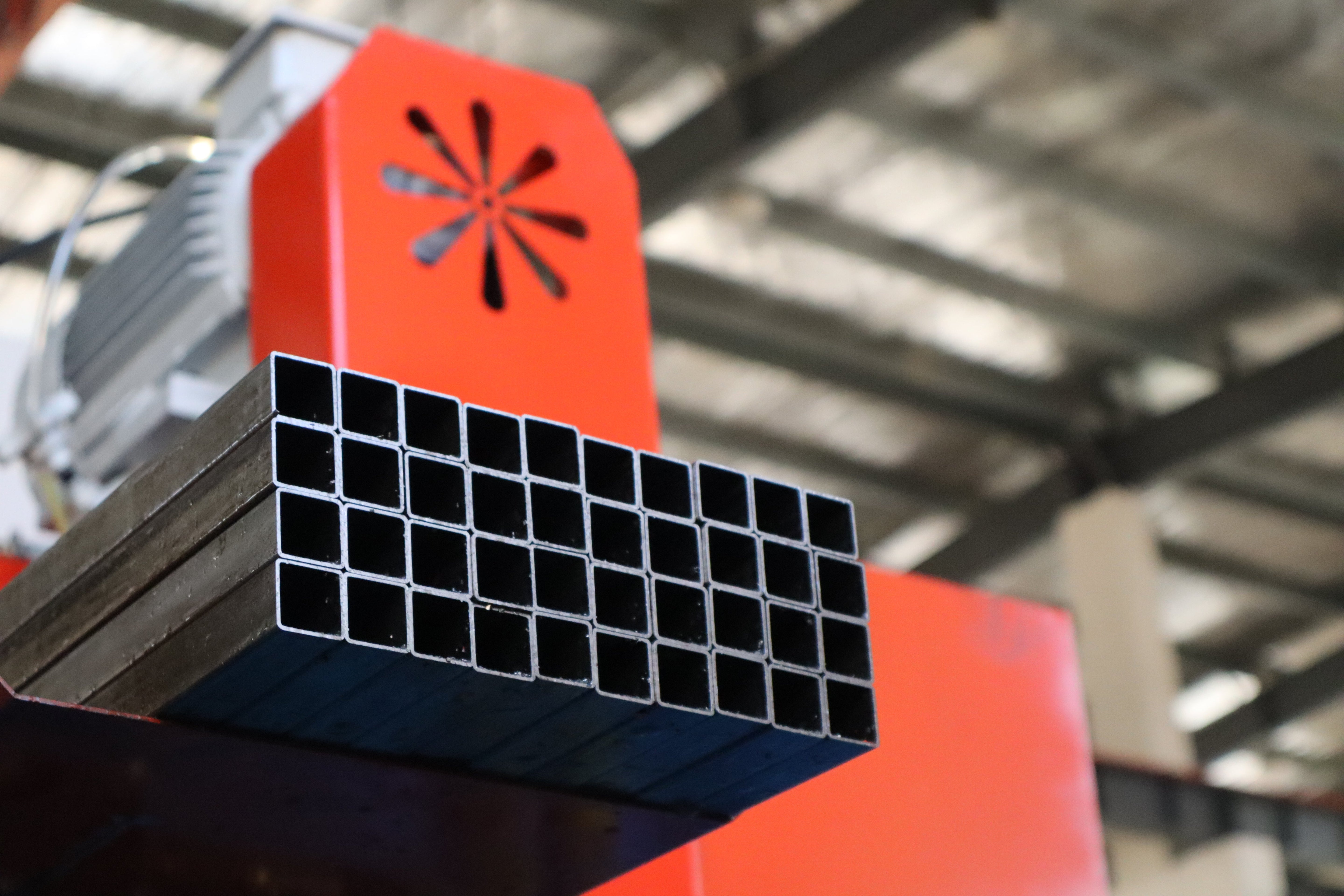
Optimizing Your Production: Choosing the Right Metal Circular Sawing Machine
In industrial manufacturing, the quality of your finished product starts with the first cut. Whether you are fabricating complex automotive components, stylish steel furniture, or high-load-bearing scaffolding, the metal circular sawing machine is the backbone of your production line.

1. Automotive Components: Precision Above All

In the automotive sector, tolerances are measured in fractions of a millimeter. Every component must be exact to ensure safety and assembly accuracy.
- Why a Circular Saw? It provides the clean, burr-free cut required for critical parts.
- Key Feature: Servo-driven feeding systems for high repeatability.
2. Furniture Manufacturing: Clean Aesthetics and Thin-Wall Efficiency

Furniture design often involves stainless steel or thin-walled pipes that are easily deformed.
- The Challenge: Cutting without crushing the pipe or leaving unsightly burrs.
- Why a Circular Saw? Specialized clamping systems prevent deformation, ensuring immediate readiness for welding.
3. Scaffolding Production: Durability and High-Volume Speed
Building infrastructure demands speed and heavy-duty reliability.

- The Challenge: High throughput requirements for daily industrial use.
- Key Feature: Robust gearboxes and automated feeding systems to minimize downtime.
Frequently Asked Questions (FAQ)
Q1: Why is a metal circular sawing machine better than a band saw for automotive parts?
A: Circular sawing machines offer significantly higher precision and better edge quality (burr-free). This eliminates the need for expensive secondary grinding, which is critical for the tight tolerance requirements of automotive parts.
Q2: How can I prevent thin-walled pipes from deforming during the cutting process?
A: The key is using a metal circular saw equipped with a specialized multi-side clamping system. This ensures even pressure distribution around the pipe circumference, preventing crushing while maintaining cut accuracy.
Q3: What maintenance tips will extend the life of my industrial circular saw?
A: Regular maintenance includes checking the coolant concentration daily, ensuring proper blade tooth count (TPI) for the material thickness, and cleaning the chip removal system to prevent vibrations that can damage the blade and gearbox.
Ready to streamline your cutting process? Click here to contact our engineers and let us help you select the model that maximizes your ROI.