
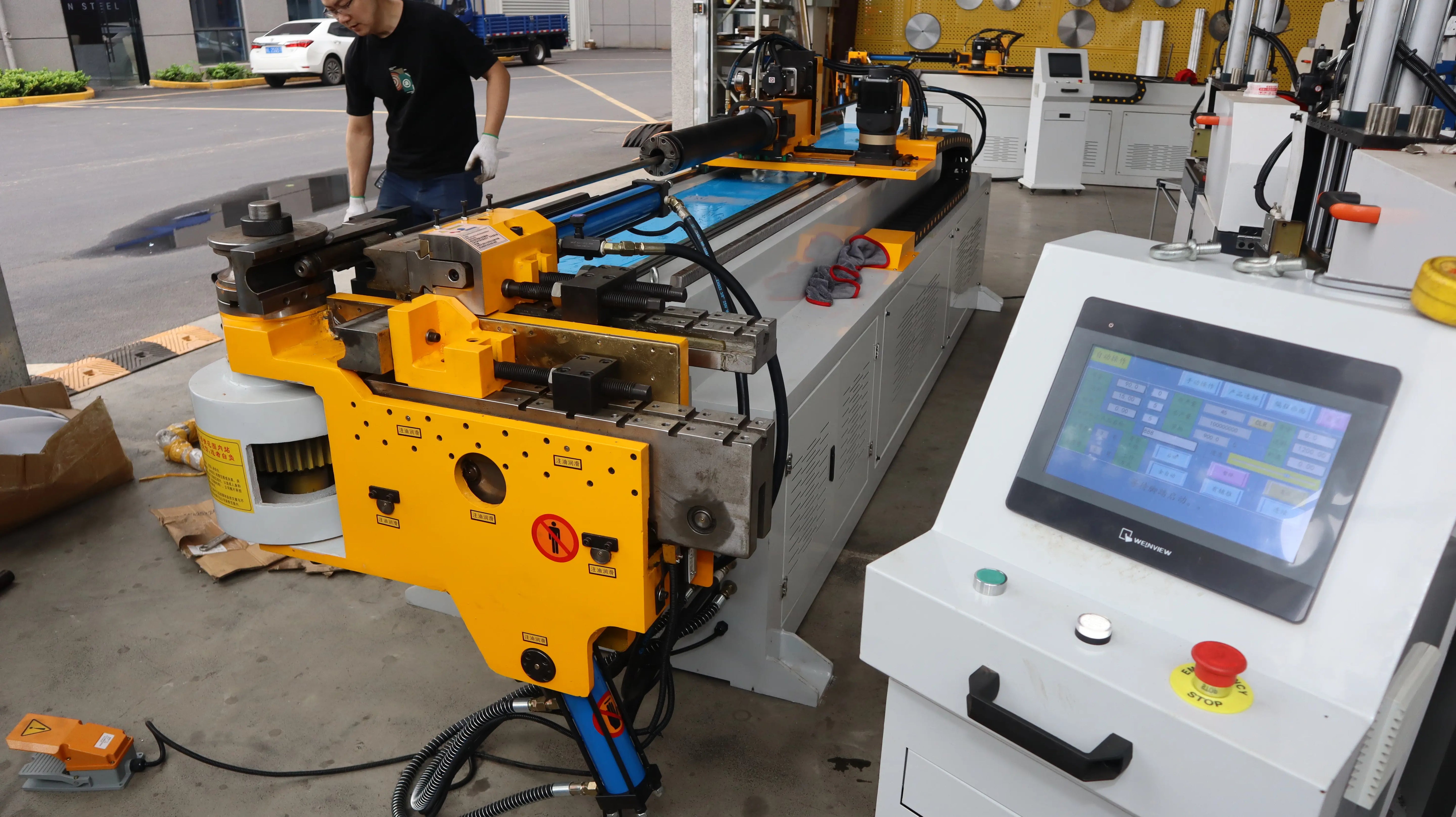
Precision Matters: 5 Key Factors to Consider When Buying a CNC Pipe Bender
In industrial tube processing, the precision and stability of your pipe bending machine directly determine the quality of your finished products and your scrap rate. Whether you are in automotive parts manufacturing, gym equipment production, or furniture making, selecting the right machine is the key to improving efficiency. With so many options on the market, how can business owners make the right choice? This article will help you navigate the process.
[Section 1: Define Your Processing Requirements]
Before making a purchase, you need to be clear about three core indicators:
Material Specifications: What materials are you mainly processing? (e.g., steel, stainless steel, or copper pipes). What are the maximum outer diameter and wall thickness? (For instance, our [suspicious link removed] is specifically designed to handle pipes with a maximum diameter of 38mm.)
Center Line Radius (CLR): What is the minimum bending radius you require? This will affect your mold customization.
Automation Level: Do you need manual assistance, or are you looking for a fully automated CNC control system to maximize output?

[Section 2: Why Choose a CNC Pipe Bending Machine?]
Compared to traditional manual or semi-automatic equipment, the core advantages of a CNC system include:
High Consistency: Once the program is set, the repeatability and precision can be maintained within extremely tight tolerances.
Complex Geometry: Capable of handling multi-angle and multi-dimensional continuous bending tasks.
Ease of Operation: Reduces reliance on highly skilled labor, effectively lowering long-term human resource costs.
Click to check out our latest product to see detailed technical parameters for the 38CNC model.
[Section 3: Hardware and Software Reliability]
Beyond the mechanical structure, you should evaluate the supplier based on the following:
Technical Transparency: A reliable supplier should provide detailed specifications, including motor power, transmission methods, and cooling system performance.
After-Sales Support: Since industrial equipment maintenance is critical, does the supplier offer 24/7 technical support?
Software User-Friendliness: Is the interface multi-language capable? Does it support offline programming?

| Equipment Model | DW-38CNC-2a-1s |
|---|---|
| Maximum bending diameter * wall thickness | Φ38*2mm |
| Maximum bending radius | r180 |
| Bending Speed | 150°/s |
| Pipe bending method | Servo feeding |
| Applicable materials | iron pipe/carbon steel/stainless steel/aluminum/copper |
[Section 4: Common Pitfalls to Avoid]
Don't Price-Shop Alone: Extremely low prices often indicate compromised components, such as cheaper motors or lower-precision lead screws.
Request Sample Testing: If possible, send sample tubes to the manufacturer to test their bending capabilities and check for surface wrinkles or ovality.
Buying a pipe bending machine is not just a one-time purchase; it is a long-term investment in your production capacity. If you still have questions during the selection process or need a processing evaluation for your specific tube material, feel free to contact our technical experts.
[Get a Quick Quote]: [Contact Us]
[Technical Support]: If you need a customized solution, click [Support page] to reach our 24/7 technical team.
[Technical Support]: If you need a customized solution, click [Support page] to reach our 24/7 technical team.